
What to Expect When Having a Tree Removed in Oak Park, IL
If you have a tree on your property that does not look right, you are probably asking the same question most Oak Park homeowners ask before picking up the phone: is this serious enough to actually do something about?
It is a fair question. Oak Park is full of mature trees, and most of them have been around long enough to develop quirks, old scars, and the kind of weathered look that can be hard to read. Some of what looks concerning is cosmetic. Some of it is not. Knowing the difference before you call a tree crew is worth understanding, and that is exactly what this blog covers.
Whether you have noticed a lean that was not there last season, branches that did not come back this spring, or something growing at the base of the trunk, there are reliable signs that tell you a tree has crossed from manageable to needs-to-come-down. Oak Park homeowners encounter this more often than most, given the age and density of the tree canopy here. If you have been dealing with other tree issues on your property, the 5 Common Tree Problems Homeowners Face in Oak Park, IL is worth a read alongside this one.
This blog walks through the full process of what to expect when having a tree removed in Oak Park, from the first call through final cleanup, so you know exactly what you are getting into before the crew shows up.
How the Process Starts: The Estimate and Site Assessment
Tree removal does not begin with a chainsaw. It begins with a visit.
Before any work is scheduled, a professional crew comes out to assess the tree and the property. This is not a formality. What the crew learns during that visit directly shapes how the removal is planned, what equipment gets brought in, and how the job is priced.
What the Crew Evaluates On-Site
The assessment covers more than just the tree itself. The crew is evaluating the full picture of what the job involves:
- Tree size, species, lean direction, and overall structural condition
- Proximity to structures, fences, utility lines, and neighboring properties
- Access points for equipment, including whether a truck and chipper can reach the work area
That last point matters more than most homeowners expect. A tree that would be straightforward in an open yard becomes a different job entirely when it is surrounded by a fence, a detached garage, and a neighbor’s property line.
What Oak Park Permits May Require
Oak Park has tree ordinances that require permits for removal of certain trees, particularly parkway trees and trees above a specific trunk diameter. A qualified crew handles the permit process on your behalf. You do not need to navigate village hall on your own.
What you should know is that the permit step exists. If scheduling takes a few extra days after the estimate, that is often why. A crew that skips this step and removes a protected tree without a permit is leaving the liability with you, not them.
How to Prepare Your Property Before the Crew Arrives
The homeowner’s role before removal day is straightforward, but doing it right prevents delays and protects your property. Here is what to take care of before the crew arrives:
- Move vehicles out of the driveway and off the street directly in front of the property. The crew needs space for a truck and chipper, and debris can land on anything left underneath the work zone.
- Clear outdoor furniture, pots, and decorations from the area around the tree. If personal items are left in the work zone and get damaged, that is generally on the homeowner.
- Secure pets and keep children away from the area on removal day. The work zone is not safe for either.
- Make sure the crew has clear access to the tree. That means the gate is unlocked and any path to the backyard is clear.
- You do not need to be home while the work is done, but being reachable by phone is helpful if a question comes up mid-job.
What Happens During the Removal
When the crew arrives, they do a brief site walkthrough before touching anything. This is the final check on access, drop zones, and rigging plan. It takes a few minutes and it happens every time regardless of how straightforward the job looks.
The first sounds you will notice are the chipper warming up and ropes being staged. Setup comes before cutting.
Rigging and Setup
Before the first cut is made, the crew establishes the drop zone and sets up ropes or rigging to control how sections of the tree are lowered. In Oak Park’s tight residential lots, this controlled approach is standard. Most properties in the village do not have open space to simply fell a tree in one direction.
The setup phase includes:
- Positioning safety ropes and rigging lines on the tree
- Staging equipment and establishing where debris will land
- Setting up any aerial lift or crane if the job requires it
All of this happens before a single branch comes off.
Limbing and Sectioning
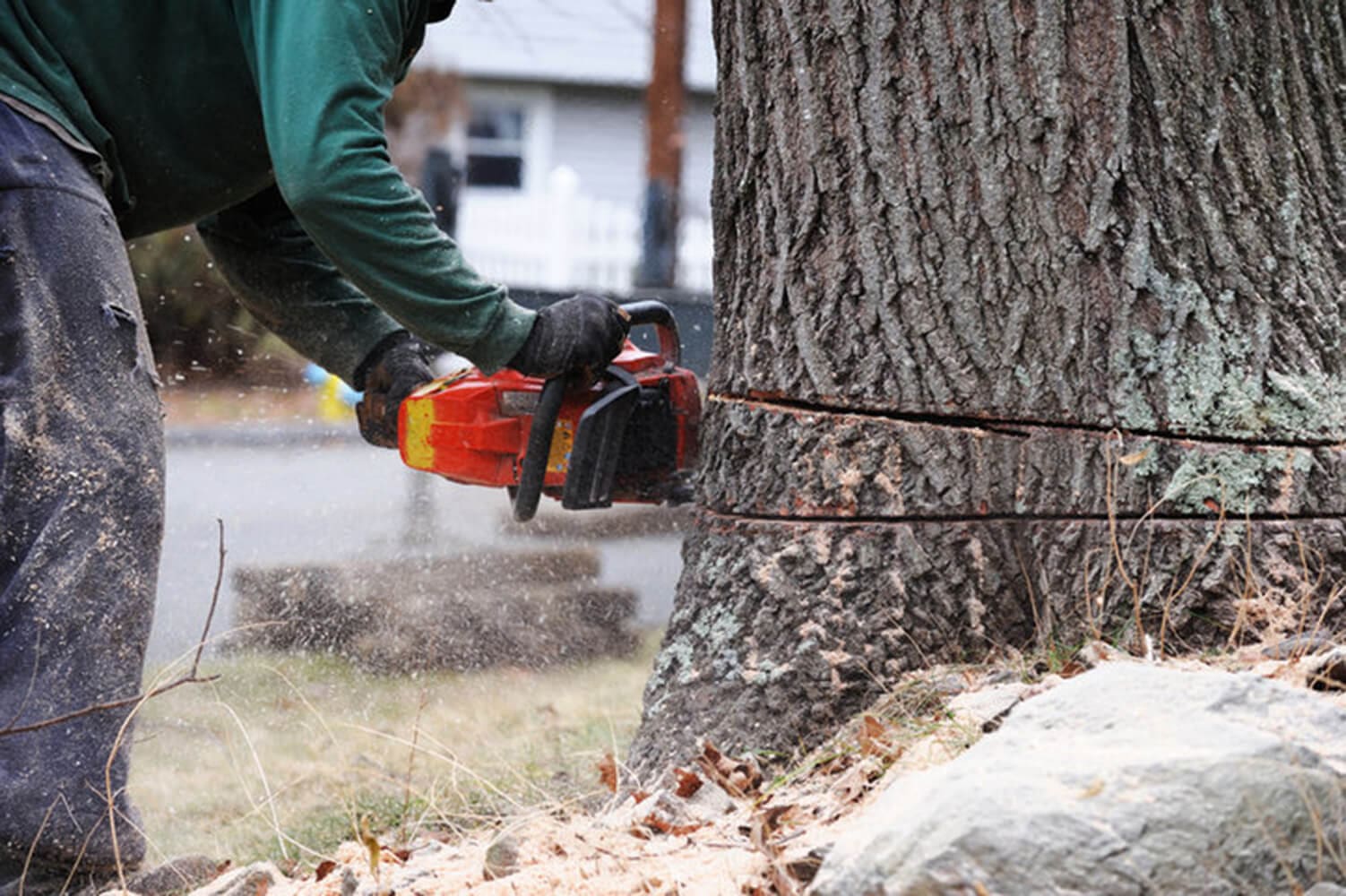
Large branches come off first. Each one is cut in a manageable section and lowered to the ground in a controlled sequence rather than dropped. Once the canopy is cleared, the trunk is cut in sections from the top down until the tree is fully removed.
Every cut is deliberate. The crew is managing where each piece lands, not cutting until something falls and hoping for the best.
What to Expect When Having a Tree Removed Near Structures
When the tree is close to a house, fence, garage, or neighboring property, the work slows down. Technique becomes more precise and equipment choices matter more. A crew may bring in a crane or aerial lift for large trees or situations where the drop space is extremely limited.
This is where experience and the right equipment separate a clean job from a costly mistake. Removing a tree in a confined Oak Park lot without damaging adjacent structures requires both. You can learn more about what that work involves on the tree removal service page.
What Happens After the Tree Is Cut Down
Once the trunk sections are on the ground, the crew shifts to processing and cleanup. This phase takes real time and should not be rushed.
Stump Options
The stump stays in the ground after removal unless stump grinding is scheduled. It does not come out as part of the removal itself.
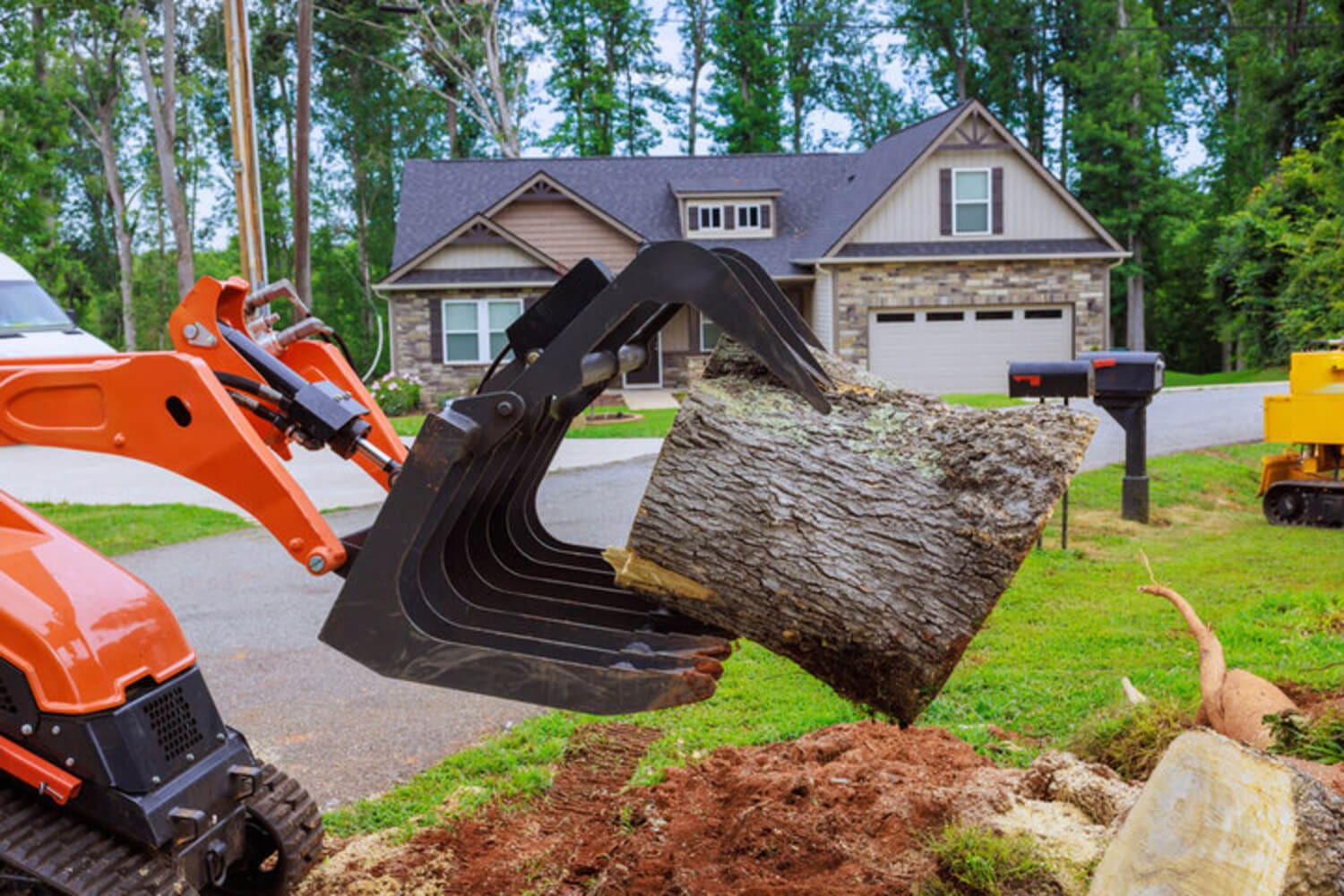
Stump grinding involves a machine that chips the stump down below grade, leaving wood chips behind that can be raked over or removed. What the yard looks like afterward depends on the size of the stump and the depth of the grind, but the area will be level and workable.
Stump grinding is typically a separate appointment scheduled within a few days of removal, not same-day in most cases. If you want it done, schedule it at the same time as the removal so it gets on the calendar. You can find out more about what that service involves on the stump grinding page.
Wood and Debris
Once the tree is down, you have options for what happens to the material:
- Logs can be cut into firewood lengths and left on the property
- Wood can be chipped into mulch on-site
- Everything can be hauled away by the crew
The crew needs to know your preference before they start processing. Once logs are chipped, that decision is made. Clarify this at estimate time so there are no assumptions on either side.
Final Site Condition
The crew rakes and cleans the work area before leaving. Expect a clean site, not a manicured one.
Some ground disturbance is normal. Heavy equipment moving through a yard and the removal of a large root ball both leave marks. Surface depressions where the root ball was can be filled with topsoil and reseeded, but that is typically a separate step the homeowner takes care of after the job is complete.
What to Expect with Timing and Scheduling
How long removal takes depends on the size of the tree, the complexity of the site, crew size, and access conditions. General ranges:
- Small to medium trees: often completed in two to four hours
- Large or confined trees in tight Oak Park lots: can take most of a full day
Stump grinding is a separate appointment, typically scheduled one to five days after removal. Some crews are required to wait 48 hours between removal and grinding due to local utility notification requirements.
Weather delays and permit timelines can affect the schedule. A professional crew communicates these proactively rather than leaving you to follow up and wonder what is happening.
Choosing the Right Tree Removal Company in Oak Park
Look for a crew that is licensed, insured, and familiar with Oak Park’s village ordinances and the specific conditions of mature residential properties in the area.
The permit question matters more than most homeowners realize. When a crew skips the permit process, the liability lands with the property owner. An unpermitted removal of a parkway tree or a protected-diameter tree can result in fines assessed to you, not the contractor. Before hiring, it is worth asking:
- Do you handle the permit, or is that on me?
- Are you familiar with Oak Park’s parkway tree regulations?
- Does your insurance cover damage to adjacent structures?
A crew that answers those questions clearly and confidently is a crew that knows what they are doing. For a deeper look at what separates qualified tree removal companies from the rest, the Ultimate Guide to Choosing a Trusted Tree Removal Service in River Forest, IL covers it in detail.
Get a Free Estimate for Tree Removal in Oak Park
Tree removal in Oak Park is a predictable process when you work with a crew that knows the village, understands the ordinances, and has the equipment to handle tight residential lots without damaging the property around them.
If you have a tree that needs to come down, we are happy to take a look. Contact us today to schedule a free estimate and get a clear picture of what the job involves before any work begins.