
The Benefits of Ornamental Pruning for Trees and Shrubs in Oak Park, IL
Most homeowners think of ornamental pruning as something they do when a shrub looks overgrown or a flowering tree has gotten out of hand. It feels optional, a nice-to-have when time allows. The reality is that the benefits of ornamental pruning go well beyond tidying up the yard. Regular, correctly executed pruning directly affects how your trees and shrubs grow, how they resist disease, how abundantly they flower, and how long they remain healthy assets on your property.
Oak Park residential landscapes are full of ornamentals worth caring for. Japanese maples, crabapples, dogwoods, lilacs, and boxwoods line driveways and front yards across the village. These plants reward consistent care and show the effects of neglect just as clearly. Understanding what ornamental pruning actually does is the first step toward getting more from the plants you already have.
Ornamental Pruning Is Not the Same as Tree Trimming
Pruning and trimming are not interchangeable, even though many homeowners use the terms that way.
Tree trimming focuses on safety and clearance. It means removing branches that threaten structures or utility lines, managing the overall canopy size of large shade trees, and keeping growth from encroaching on rooflines or walkways. It is broad work applied to large trees with clearance and safety as the primary goals.
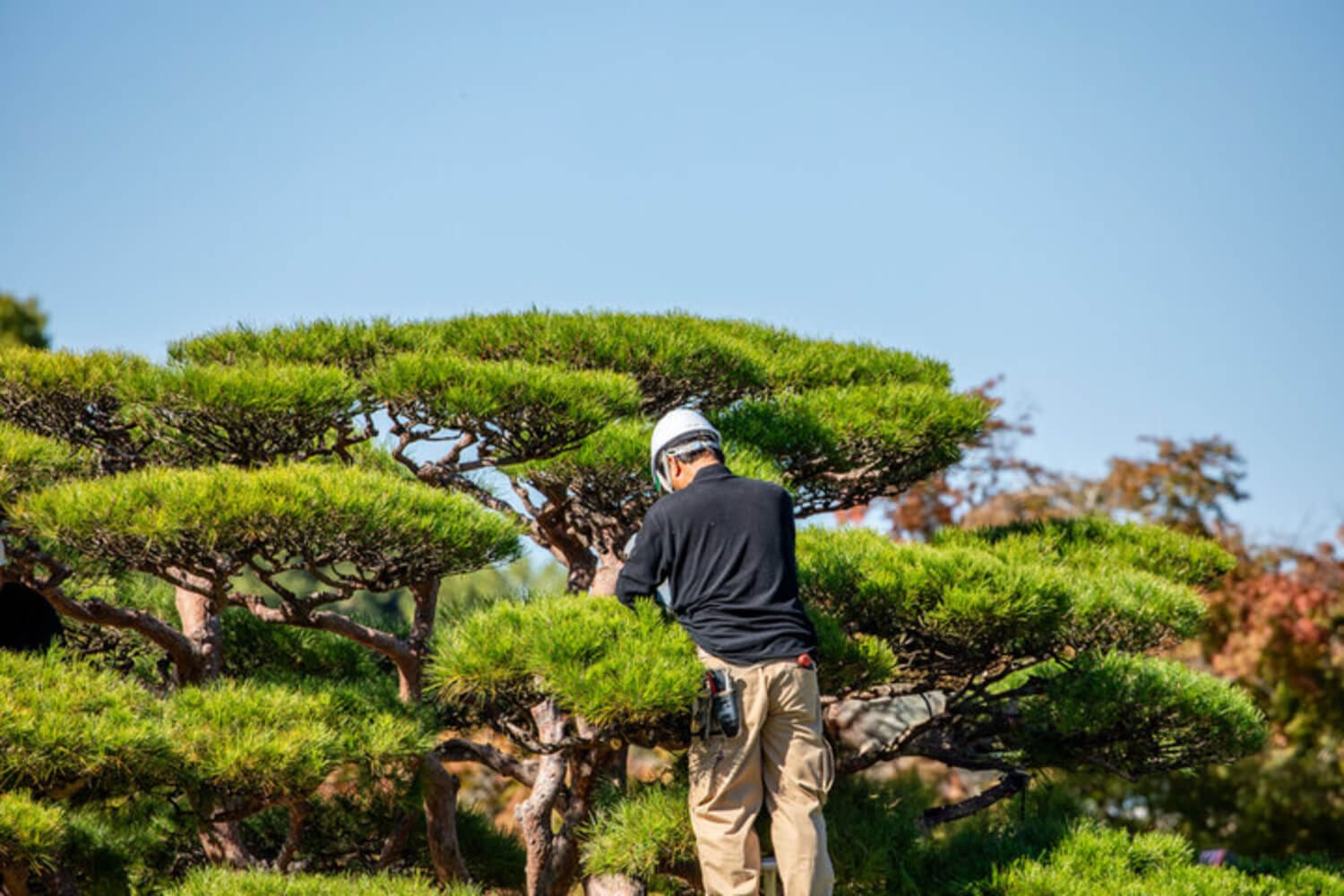
Ornamental pruning is something different. It is precise, plant-specific work that accounts for each tree or shrub’s natural form, flowering cycle, growth habit, and long-term structural development. The goal is not clearance. The goal is to bring out the best characteristics of the individual plant over its lifetime. Applying the wrong approach to an ornamental can eliminate an entire season’s flowering or undo years of structural development. These are not interchangeable services.
Ornamental Pruning Improves Plant Health from the Inside Out
The visible benefits of ornamental pruning are real and worth noting. But the health benefits that drive them happen inside the plant, in how it allocates energy, circulates water and nutrients, and defends against disease. Two mechanisms drive most of those benefits.
Deadwood Removal Redirects Energy to Living Growth
Dead, dying, and diseased branches draw on the plant’s stored energy without contributing anything in return. The plant directs resources toward tissue that cannot recover, at the expense of living branches, new buds, and productive growth.
Removing deadwood changes that immediately. The plant redirects its energy where it can actually do something. For ornamental trees and shrubs where flowering and foliage are the whole point, this redirection produces visible results. Plants pruned of their deadwood produce stronger, more abundant growth than those carrying dead weight through each growing season.
Better Airflow and Light Penetration Reduce Disease Pressure
Dense, unpruned canopies trap moisture and block sunlight from reaching interior branches. That combination creates the conditions that fungal diseases and pest populations need to establish and spread. Selective pruning opens the canopy. Air moves through it. Sunlight reaches interior growth. Moisture clears from leaf surfaces faster after rain.
In the Chicago climate, where humid summers follow cold wet springs, this matters more than it would in a drier region. Ornamental shrubs in Oak Park that go unpruned accumulate disease pressure season after season. That pressure does not stay contained to the original plant.
Ornamental Pruning Builds the Structural Foundation Your Plants Need
Structural benefits differ from health benefits in one important way: they are cumulative and formative. Every correct cut made early shapes how a plant grows for the rest of its life. A neglected structure cannot always be recovered. When it can be, the intervention required is far more aggressive than the original pruning would have been.
Early Pruning Prevents Problems That Are Expensive to Fix Later
Young ornamental trees and shrubs respond readily to pruning. Small corrective cuts made in the first few years guide structure in ways that become permanent. A young crabapple or ornamental cherry pruned correctly at planting and maintained annually for the first several years develops a strong, open framework with well-spaced branches and sound attachment angles.
The same tree ignored for five years develops crossing branches, weak attachments, and a crowded canopy. Correcting that takes aggressive intervention, and in some cases the structural problems cannot be fully undone. Early pruning is not an extra service. It is the difference between building a good plant and repairing a problematic one.
Crossing and Competing Branches Weaken Structure Over Time
When branches cross and rub against each other, they create wound sites where bark breaks down. Those wounds become entry points for disease and insects. The damage accumulates with each growing season.
Competing branches create a related problem. Two branches growing in the same direction at the same level form codominant stems with narrow, weak attachment angles. In a significant ice storm or wind event, which both occur regularly in the Chicago area, those attachments fail. Removing crossing and competing branches while they are still small is a straightforward cut. Addressing the same problem once the branches have grown to significant size is a major structural intervention.
Regular Pruning Maximizes Flowering and Preserves Natural Form
Ornamental trees and shrubs earn their place in the landscape through their visual qualities: flower display, foliage color, and overall form. Pruning is the tool that protects and enhances all three.
Flowering ornamentals pruned at the correct time relative to their bloom cycle produce more abundant flowers on healthier stems. Pruned at the wrong time, an entire season’s bloom disappears. A spring-blooming lilac pruned in fall loses next year’s flower buds. A summer-blooming shrub pruned too late in the season produces weak growth that does not harden before winter. Timing is plant-specific, and getting it right matters.
Natural form is also a direct pruning outcome. Well-pruned ornamentals retain and develop their characteristic shapes over time: the layered horizontal branching of a dogwood, the arching silhouette of a weeping cherry, the dense symmetry of a boxwood hedge. Unpruned plants lose those forms as growth becomes uneven and crowded.
There is an important distinction worth making between preserving natural form and shearing into an artificial shape. Shearing creates a dense outer shell of new growth that shades interior branches. Interior branches die back under that shell. If shearing stops, the pruner has nothing to work with. Restoration at that point requires cutting into bare wood that may not regenerate, and some plants do not recover. The curb appeal that well-pruned ornamentals deliver is not the result of shearing. For more on what that looks like on a residential property, this piece on ornamental pruning in Western Springs covers the curb appeal dimension in depth.
What Happens When Ornamental Trees and Shrubs Go Unpruned
Neglect does not hold a plant in place. It sets a biological process in motion — deadwood accumulation, structural weakening, disease pressure — that compounds season after season and becomes harder to reverse the longer it continues.
Here is what that process looks like in practice:
- Deadwood accumulates. It becomes a falling hazard and a reservoir for disease and insects, not just a drain on the plant’s energy as covered earlier.
- Dense unpruned canopies develop persistent fungal problems that spread to neighboring plants.
- Crossing branches create wound sites and structural weaknesses that grow more serious each year.
- Overgrown shrubs lose their natural form and begin to encroach on walkways, structures, and neighboring plants.
- Severely neglected ornamentals sometimes require aggressive rejuvenation that sets the plant back significantly. In some cases, the damage cannot be undone and removal becomes the only option.
The longer pruning is deferred, the fewer options remain and the more expensive the correction becomes.
Common Ornamentals in Oak Park and What Pruning Does for Each
Oak Park residential landscapes include a range of ornamentals that each respond to pruning differently. Each species also has its own ideal pruning window — for a full breakdown of timing by season, this guide to tree trimming timing in Oak Park covers that in detail. Here is a quick look at what pruning delivers for the most common ornamentals in the area:
- Japanese maples: Slow-growing and sensitive to heavy cuts. Pruning focuses on deadwood removal, crossing branch elimination, and preserving the layered architectural form that makes these trees a focal point. Less is more.
- Crabapples: Prone to watersprouts and suckers that drain energy from flowering. Annual removal of watersprouts and crossing branches keeps the canopy open and maximizes bloom production each spring.
- Dogwoods: Benefit from light structural pruning that maintains their horizontal branching pattern. The goal is to keep the canopy open and remove deadwood without disrupting the characteristic layered form.
- Ornamental cherries: Fast-growing and prone to crossing branches and watersprouts. Annual pruning maintains the weeping or vase silhouette and removes growth that disrupts the plant’s defining shape.
- Boxwoods: Respond well to selective hand pruning that builds interior density without the dieback that shearing creates. Correctly pruned boxwoods in Oak Park’s climate resist disease pressure better than sheared ones.
- Lilacs: Bloom on old wood, which means pruning at the wrong time eliminates the following year’s display entirely. Rejuvenation pruning carried out over several years can restore an overgrown lilac without sacrificing its flowering.
Schedule an Ornamental Pruning Assessment in Oak Park
Ornamental pruning delivers health, structural, and flowering benefits that build on each other over time. The plants that receive regular professional attention consistently outperform those that do not, and the gap widens with each passing season.
The homeowner who schedules an assessment now gets a clear picture of what their ornamentals need, when they need it, and what a realistic long-term plan looks like. We serve Oak Park and the surrounding Cook and DuPage County area. Contact us to schedule an ornamental pruning assessment and get your trees and shrubs on a plan that actually serves them.